
Blog
Myopia in Children: Signs Parents Should Watch For

Myopia, or short-sightedness, means near objects look clear while distant ones look blurred. It usually starts during the school years and can keep getting stronger as a child grows. Rates of myopia in children have risen around the world over the past few decades, and eye care professionals now treat it as something to manage early rather than simply correct.
What causes it
In a myopic eye, the eyeball grows slightly too long, or the front of the eye is too steeply curved, so light comes to a focus in front of the retina instead of on it. Genes play a part: children with one or both short-sighted parents are more likely to develop it. Lifestyle matters too. Long hours of close work and little time outdoors are both linked to a higher risk.
Signs to watch for
Children rarely say they cannot see well, because they assume everyone sees the way they do. Look out for:
- Squinting or half-closing their eyes to see far away
- Sitting very close to the TV or holding tablets close to their face
- Frequent eye rubbing or headaches
- Difficulty reading the board at school, or a teacher mentioning it
- Losing interest in sports or activities that need distance vision
Why early action matters
Blurry vision is the obvious problem, but it is not the only one. Higher levels of myopia in adulthood are associated with a greater risk of serious eye conditions later in life, including retinal detachment, glaucoma and myopic macular degeneration. Slowing how quickly myopia progresses during childhood can lower that long-term risk.
What helps
- Time outdoors. Research consistently links more daily time outside in daylight with a lower chance of developing myopia.
- Breaks from close work. Encourage regular pauses from books, homework and screens, and keep reading material at a comfortable distance in good light.
- Regular eye exams. A check before starting school, then as often as your optometrist advises, catches changes early.
- Myopia control options. Specially designed spectacle lenses, certain contact lenses and low-dose atropine eye drops are used to slow progression. Ask an optometrist or ophthalmologist which, if any, suits your child.
Glasses children will actually wear
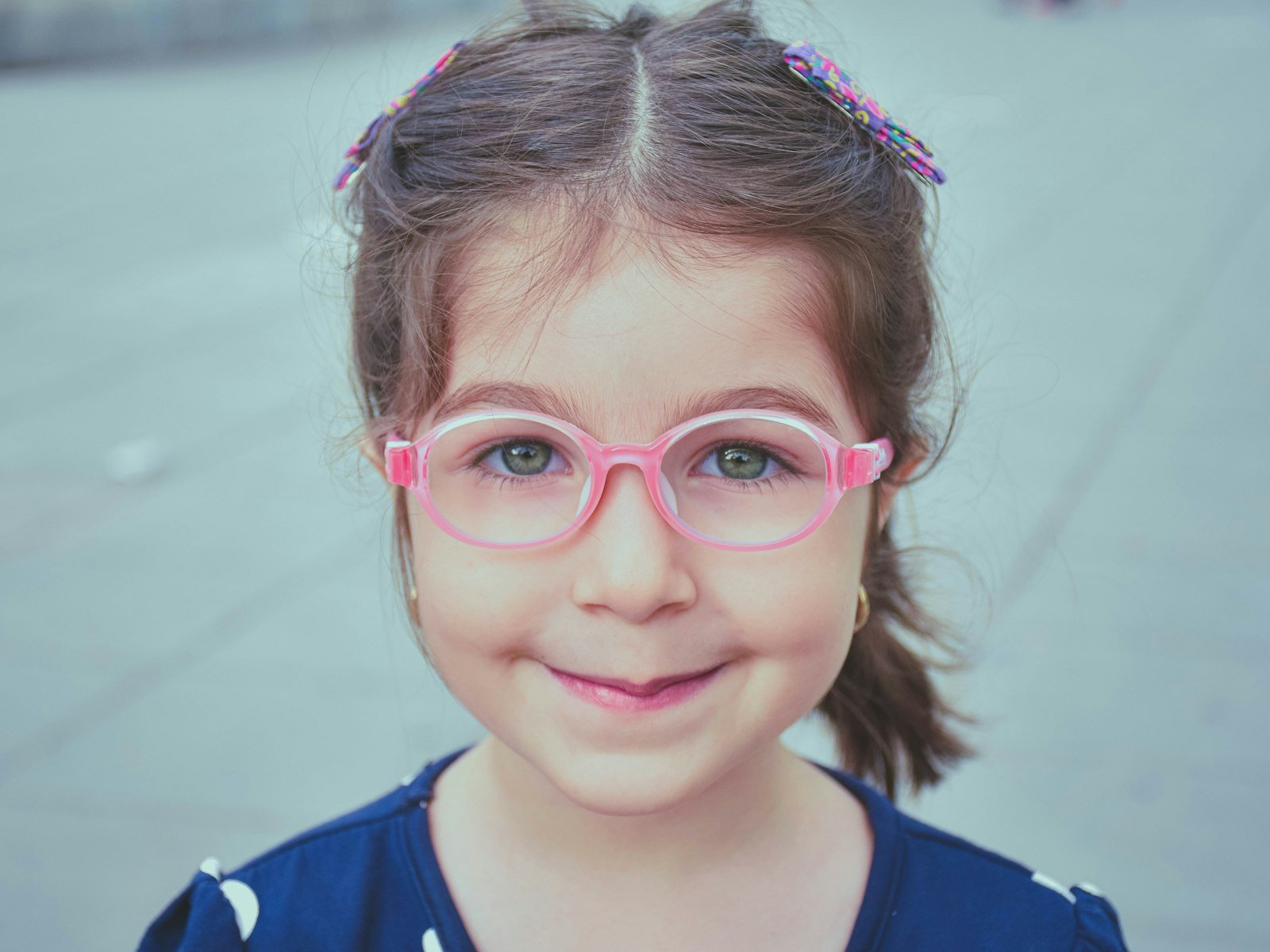
The best prescription does nothing in a school bag. Choose lightweight frames with flexible hinges that sit level and do not slide down the nose, and let your child help pick the colour. Glasses they like are glasses they keep on.
This article is for general information only and is not a substitute for advice from a qualified eye care professional.


